
Traveling to Japan with a selective eater takes a little extra planning. For many autistic and neurodivergent kids, food is about safety, not preference. New tastes, textures, or smells can feel overwhelming. Meanwhile, a trip already brings new sounds, places, and routines. This guide focuses on familiar “safe foods,” predictable meals, and calm places to eat.
Quick answer
Convenience stores (konbini) can become your daily anchor. Keep safe foods available, reduce surprises, and let your child set the pace.
Last checked: 15 October 2026

Why Food Can Feel Different for Neurodivergent Kids
This is not about being “picky.” The National Autistic Society notes that some autistic people eat only a limited range of foods. It also explains that many autistic people experience sensory differences. These can affect tastes, smells, and textures.
So, the goal of this guide is simple. Keep safe foods available, reduce surprises, and let your child set the pace.
Safe Foods in Japan: Consistent Konbini Staples
Convenience stores (konbini) can become your daily anchor. The big three chains are 7-Eleven, FamilyMart, and Lawson. As JNTO’s konbini guide notes, you can buy food there around the clock. Still, some stores in malls, stations, or rural areas keep shorter hours.

Staples many families rely on
- Plain or salted onigiri (rice balls), wrapped and clearly separated
- Soft white bread (shokupan) and simple sandwiches
- Bananas
- Plain yogurt and small milk cartons
- Plain crackers and rice crackers
Why chain stores help
Each chain sells its own-brand products in many locations. Therefore, the same packaging often appears from store to store. However, ranges differ between chains and regions. So, once you find a safe item, note the chain and take a photo of the package. That way, you can look for it again.
Also, staff usually offer to heat bento boxes. If warm food is a problem, simply decline.
Seeing Dishes Before Ordering
Uncertainty is often the hardest part of eating out. Fortunately, Japan makes it easy to see food first.
Plastic food displays
Many restaurants show realistic plastic models of their dishes. JNTO describes these displays as common in department stores, stations, tourist areas, and malls. Your child can look at the exact dish before you go inside.
Picture menus and kids plates
Family restaurant chains usually have photo menus. In addition, many offer “okosama” (kids) plates with small, separate portions.
- Gusto — kids plates for elementary-age children and younger, plus kids chairs (Gusto family page)
- Denny’s Japan — a full “okosama” kids section (kids menu)
- Royal Host — kids plates such as omurice with fried shrimp (kids menu)
- Saizeriya — simple Italian-style dishes that families often share (sharing tips)
- Sushiro — a “Kodomo Sushiro” program with kids sets and kids chairs (official page)
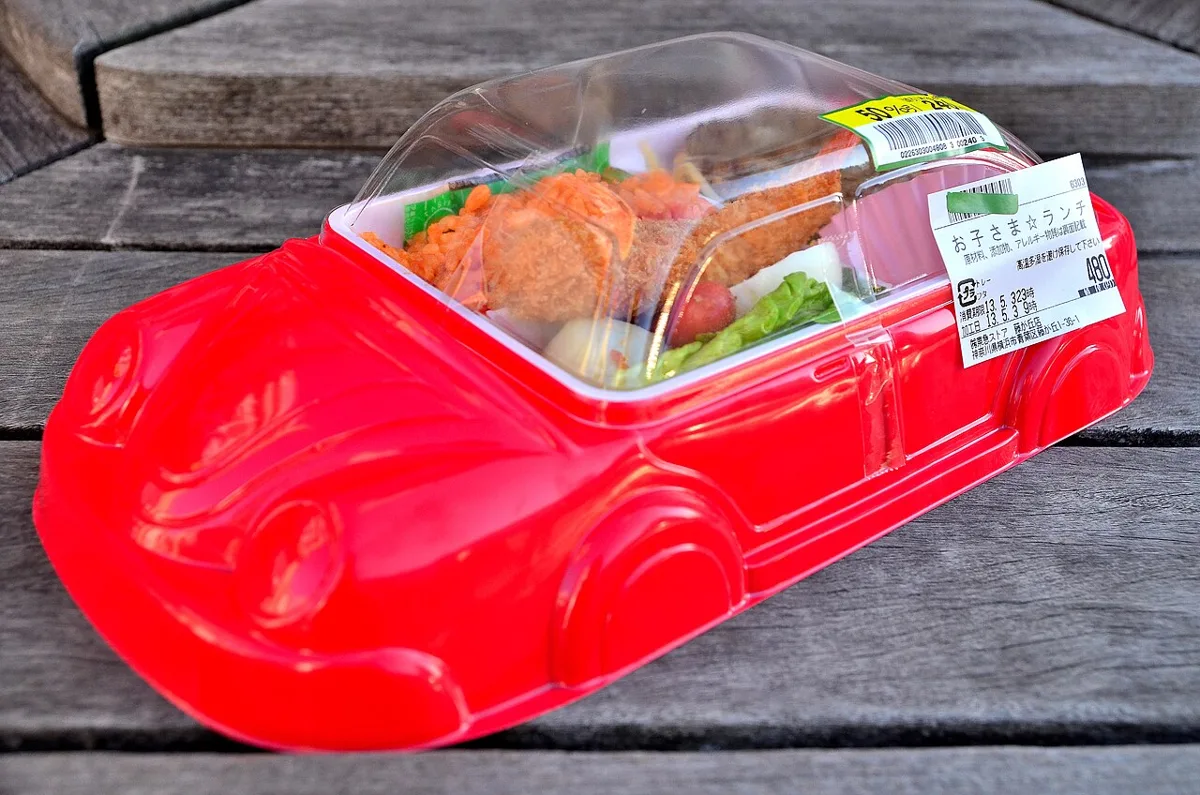
Before your trip, browse these official menus together. Then, your child can pick one or two “yes” dishes in advance.
Sensory-Friendly Eating: Textures, Mixed Foods, Noise
Textures and mixed foods
Many Japanese dishes come mixed or in broth. For example, curry, donburi, and ramen combine several textures. Instead, look for dishes served in separate parts.
| Option | Why it can work | Things to watch |
|---|---|---|
| Konbini staples | Same packaging, plain choices | Fillings vary, so check labels |
| Family restaurant kids plates | Photo menu, separate portions | Sauces may touch other food |
| Hotel breakfast buffet | Choose each item yourself | Busy at peak times |
| Plain udon | Simple, soft, mild | Broth often uses dashi |
| Food from home | Fully familiar | Must be meat-free (see below) |
You can also ask for sauce on the side. Not every kitchen can change dishes, so keep a safe snack as backup.
Noise and crowds
Restaurants can get loud and crowded at lunch and dinner peaks. So, aim for quieter times, such as 11:00 or mid-afternoon. Booth seats away from the entrance can feel calmer. Noise-cancelling headphones also help many kids.
Packing Familiar Snacks from Home
A few familiar snacks give real security, especially on the first days. However, Japan has strict quarantine rules.
Pouches and snacks with meat or egg
Japan’s Animal Quarantine Service says any meat product needs an export-government inspection certificate. The rule covers eggs too. Personal-use items rarely have one, so most cannot come in. Cooking, vacuum packing, or airport purchase does not change this. The Plant Protection Station adds that products with any meat at all are banned. Penalties can be severe.
So, officers will likely seize a chicken-and-veg pouch. Egg-based products carry the same risk.
Practical alternatives
- Pack meat-free and egg-free snacks, such as crackers, cereal bars, or fruit pouches.
- Keep labels and ingredient lists in case an officer asks.
- Buy baby food in Japan if your child still eats it. Drugstores and supermarkets stock pouches.
- For severe allergies, contact the quarantine office at your arrival airport first. They may ask for an ingredient list and package photos.
Food Allergies: Labels and Allergy Cards
Japan’s Consumer Affairs Agency requires packaged foods to list nine allergens. These are shrimp, crab, walnut, wheat, buckwheat (soba), egg, milk, peanut, and cashew. The agency added cashew on April 1, 2026. However, there is a transition period until March 31, 2028, so older stock may not show it yet.
Another 20 items, including soy, sesame, and pistachio, are only “recommended.” See the agency’s English labelling leaflet for how labels look. Note that the leaflet predates the cashew change.
Therefore, packaged konbini food is often easier to check than restaurant food. As the JNTO FAQ points out, not all restaurants display allergy information.

How to use an allergy card
- Carry a bilingual allergy card in Japanese and English.
- Name the exact food, and note if traces are dangerous.
- Show it before ordering, not after the food arrives.
Also, watch for hidden ingredients. Dashi (fish stock) appears in many soups. Soba contains buckwheat. Wheat hides in soy sauce and tempura batter.
Meal Routines in Japan with a Selective Eater
Routine can make a new country feel manageable. Here is a simple framework.
1. Keep the same breakfast
Choose one breakfast that never changes. A hotel buffet or a konbini run both work. Then, the day starts with something known.
2. Choose a food-friendly base
Areas near big stations usually have more konbini and family restaurants. See our guide on where to stay in Tokyo with kids. Also, a room fridge helps you store yogurt and milk.
3. Pick the season wisely
Heat and crowds can drain energy fast. Read Japan with kids: when to go to find a calmer month.
4. No pressure to try new foods
Travel already brings plenty of novelty. So, there is no need to add tasting challenges. If your child shows interest in something, great. Otherwise, safe foods are enough for this trip.
5. Plan meals like activities
Put meals on the daily plan with a time and place. Show photos of the restaurant or konbini in advance. Finally, always carry a backup snack.
Simple Japanese Phrases for Mealtimes
- Kodomo-yō no menyū wa arimasu ka? — Do you have a kids menu?
- Sōsu wa betsu de onegaishimasu. — Sauce on the side, please.
- Kore wa nuki de onegaishimasu. — Without this, please.
- Arerugī ga arimasu. — I have an allergy.
Final Thoughts
Traveling Japan with a selective eater works best when food stays predictable. Konbini staples, picture menus, and quiet meal times reduce stress for everyone. Meanwhile, the rest of Japan can provide the adventure.
Next, revisit the best time to visit Japan with kids and our Tokyo family stay guide.
Want more calm, practical help? Sign up below for our newsletter: occasional emails with new guides and real tips from parents.
FAQ
What can a selective eater eat in Japan?
Convenience stores (konbini) such as 7-Eleven, FamilyMart and Lawson sell plain staples like salted onigiri, soft white bread, bananas, plain yogurt and crackers. Because each chain sells its own-brand products, the same packaging often appears from store to store. Take a photo of any safe item so you can find it again.
Can my child see a dish before we order in Japan?
Often, yes. Many restaurants show realistic plastic models of their dishes, and family restaurant chains such as Gusto, Denny’s Japan and Royal Host have photo menus and kids plates. Browsing the official menus before the trip lets your child pick one or two “yes” dishes in advance.
Can I bring snacks from home for my child to Japan?
You can bring meat-free and egg-free snacks such as crackers, cereal bars or fruit pouches. Japan’s quarantine rules mean products containing meat or egg will most likely be seized, even if cooked or vacuum packed. Keep labels and ingredient lists in case an officer asks.
How are food allergens labelled in Japan?
Japan’s Consumer Affairs Agency requires packaged foods to list nine allergens: shrimp, crab, walnut, wheat, buckwheat, egg, milk, peanut and cashew. Cashew was added on 1 April 2026, with a transition period until 31 March 2028, so older stock may not show it. Not all restaurants display allergy information, so carry a bilingual allergy card.
Sources and checks
Stay with us
Short, practical emails about travelling in Japan with kids. We’ll ask you to confirm by email, and you can unsubscribe anytime.
